Product Description
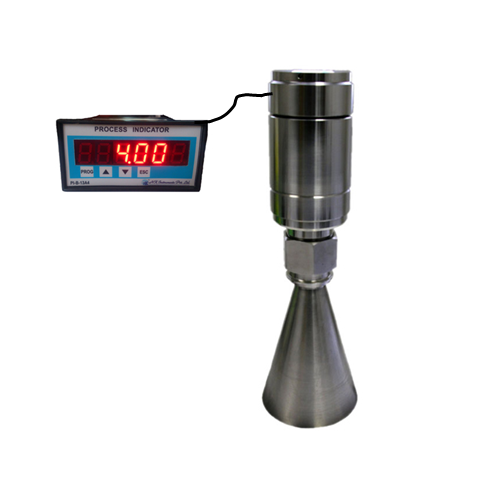
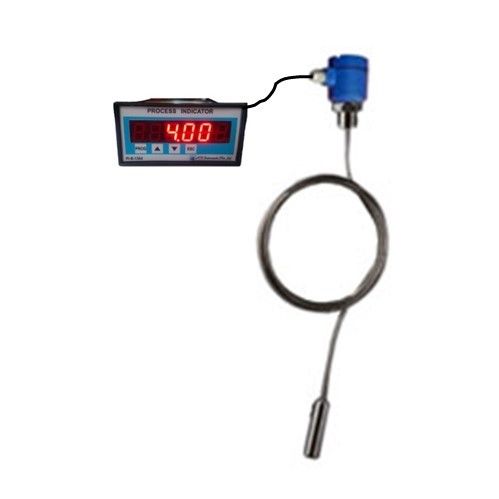
Radar Level Indicator for Solids
We have Non Contact type Radar Level Transmitters and Contact type Radar Level Transmitters also.
Self Adjusting Tracking Radar Programmable (recommended) and Simple push-button calibration Output 4-20 mA/ 20-4mA (Isolated on 4 Wire Model's only ) Optional RS232 OR RS485 For communications with calibration diagnostics & data logging software PL Compatible (Modbus RTU) Three or four Wire Operation
Application:
- Food and Beverages Water / Wastewater Chemicals with vapors
- Solids with Dust Powder
Note :To receive quick response, please provide your basic requirement details and max.Application information.
By employing FMCW radar technology, this indicator delivers high accuracy (resolution 1 mm) for solid material levels without physical contact. Its 8 beam angle ensures precise targeting, while high dust resistance and explosion proof options make it suitable for hazardous environments.
Flexible Installation & DurabilityDesigned for threaded or flanged top mounting, the device can be easily installed on a wide variety of silos, hoppers, and bins. Its robust build, including stainless steel 316L wetted parts and IP67/IP68 protection, withstands harsh industrial settings and extreme temperatures.
Smart Connectivity and OutputsIntegrating seamlessly into control systems, the device offers outputs via 420 mA with optional HART or RS485 Modbus protocols. The LCD digital display simplifies on-site monitoring. A wide supply voltage range (24 VDC/AC) and single-phase operation enable broad compatibility.
FAQs of Radar Level Indicator for Solids:
Q: How does the radar level indicator measure the level of solid materials without coming into contact with them?
A: The device uses non-contact Frequency Modulated Continuous Wave (FMCW) radar technology to transmit electromagnetic waves, which bounce off the solid surface and return to the sensor. It calculates the distance based on the time delay, ensuring accurate level measurement even in dusty or harsh process conditions.
Q: What types of environments and applications is this radar level indicator suitable for?
A: This radar level indicator is ideal for monitoring levels in storage silos, hoppers, and bins handling solids such as powders and granules. Its rugged build and wide temperature range (-40C to +250C) make it appropriate for use in industrial plants, mining facilities, and hazardous locations needing explosion proof compliance.
Q: When should explosion proof Ex d IIC T6 Gb housing be selected?
A: Explosion proof (Ex d IIC T6 Gb) housing should be chosen when the device is installed in hazardous or potentially explosive environments, particularly where flammable gases or combustible dusts are present. This option enhances safety and ensures compliance with relevant safety standards.
Q: Where should the radar level indicator be installed for optimal results?
A: For best performance, the indicator should be top-mounted on storage vessels through threaded or flanged connections, ensuring an unobstructed radar path to the solid surface. Avoid locations with excessive obstructions or metal structures directly in the radar beams line of sight.
Q: What are the benefits of using a radar level indicator versus traditional contact-based sensors?
A: Radar level indicators are maintenance-free and resist dust buildup, corrosion, and mechanical wear because they dont physically touch the material. This ensures long-term reliability, consistent measurement accuracy, and minimal downtime for cleaning or maintenance.
Q: How can the device be integrated into an existing control or monitoring system?
A: The level indicator provides multiple connectivity options, including 4-20 mA, HART, and RS485 Modbus protocols. These flexible interfaces allow direct integration with most process control systems, SCADA platforms, and digital monitoring setups.
Q: What is the process for configuring and calibrating the radar level indicator?
A: Initial configuration and calibration can be performed using the on-board LCD digital display and menu interface, or remotely via HART/RS485 Modbus communication. Users can set measurement ranges, output scaling, and display units as required for their specific application.










 Send Inquiry
 Send Inquiry
 Send SMS
 Call Me Free


