Product Description
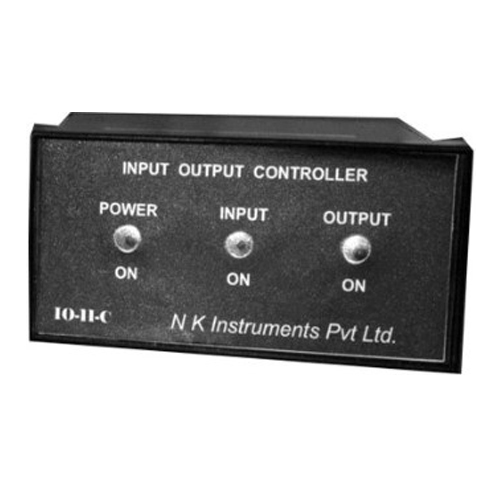
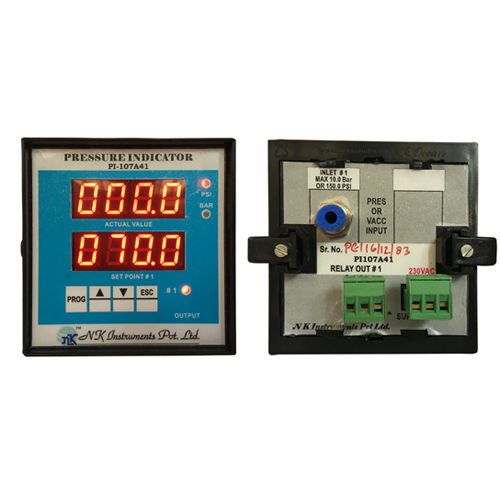
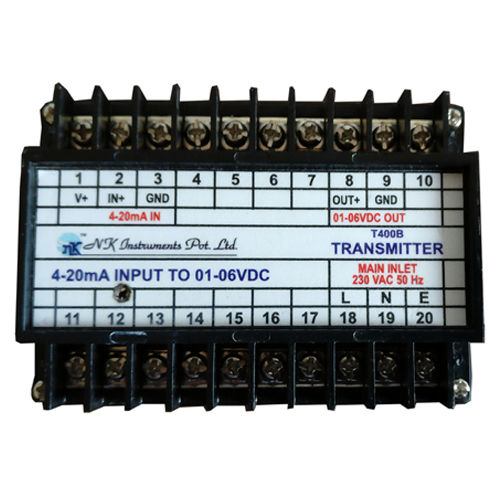
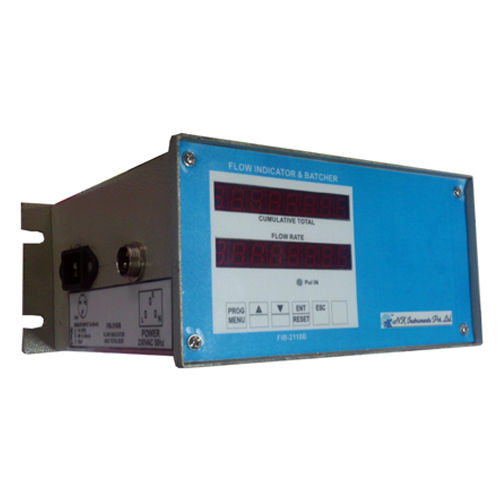
Single Input & Single Output Controller (96 X 48 mm)We provide Process Indicators and Process Indicating Controllers as per the clients demand & the process needs.
- Input can be 4 to 20 mA, 0 to 10 V or, pulses, resistance etc.
- Output can be Potential Free Contacts (Single / Two or, Four nos.) or, Re-transmitter etc.
- Display will be LED 7 segment or, LCD
- Power Supply can be 230 V AC, 110 V AC, 24 V DC or, 12 V DC
- Mounting types can be Panel mounted, Wall Mounted or, Field mounted
- Enclosure types can be IP 40, IP 54, IP 65 or, Flameproof
Note :To receive quick response, please provide your basic requirement details and max.Application information.
Advanced Control MethodsThe controller supports both PID and ON-OFF control strategies, ensuring effective process management for diverse industrial needs. Auto-tuning and manual/auto operation modes further optimize performance, adapting to dynamic process variables while maintaining your desired accuracy.
Flexible Programming & ConnectivityProgram set points easily using the front-key interface, and customize alarm outputs for one or two points. The unit also offers optional RS485 MODBUS communication for seamless integration with PLCs or industrial automation systems, facilitating remote monitoring and control if requested.
Rugged Industrial ReliabilityManufactured with a flame-retardant ABS case and IP20-rated front panel, this controller is designed for dependable operation in harsh environments. It manages temperature and humidity ranges commonly encountered in industrial settings and provides fuse protection to safeguard against electrical faults.
FAQs of Single Input & Single Output Controller (96 X 48 mm):
Q: How can I program the set point and configure the controller?
A: Programming the set point is straightforward using the front-key panel. Simply access the menu to set your desired value, which can be displayed in green on the dual LED display. All calibration and configuration steps, including alarm point selection, are performed digitally for convenience and precision.
Q: What types of sensors and inputs are compatible with this controller?
A: The controller features a universal input, making it compatible with thermocouples, RTDs like PT100, mA, and voltage signals. The measuring range will depend on the sensor type selected, providing flexibility for a variety of process or temperature control applications.
Q: When is it beneficial to use the PID over the ON-OFF control method?
A: PID control is recommended when maintaining a stable and precise process variable (such as temperature) is critical, especially in systems with slow response times. ON-OFF control is suitable for simpler or less sensitive processes where tight modulation isnt required.
Q: Where should the controller be installed for optimal performance?
A: Install the controller on a panel using its specified 96 x 48 mm cutout. Ensure its located in an environment within the 0C to 50C operating temperature range and non-condensing humidity up to 85% RH, away from sources of vibration or excessive dust.
Q: What are the benefits of the auto-tuning feature?
A: Auto-tuning simplifies the setup process by automatically adjusting PID parameters to suit the specific system dynamics. This helps achieve faster stabilization, reduces overshoot, and increases control accuracy without manual intervention.
Q: How does the alarm output configuration work, and what are its applications?
A: Alarm outputs are fully configurable for one or two points, providing flexible process safety options. You can program the alarms to signal out-of-range conditions, equipment failures, or process excursions, which is especially useful in industrial automation, oven/chiller management, and similar uses.










 Send Inquiry
 Send Inquiry
 Send SMS


