Product Description
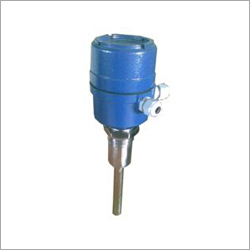
Vibrating Rod type Level Switch
Salient Features:
Fast and Easy Installation No Calibration. No effect of electrical properties of the Service material. High Reliability. Suitable for the highly dusty environment. Suitable for grain size upto 20 mm Field selectable operation logic. Can be configured either for High or Low Level point switching. Provides economical solutions. Various model not required. Reduces the Inventory cost.
Note :To receive quick response, please provide your basic requirement details and max.Application information.
| Technical Specifications (Standard): |
| SWITCHING UNIT: |
| Housing | Aluminum, weather proof, powder coated. Integral with The probe/ suitable for back panel mounting. |
| Cable entry | 2 nos. |
| Ambient temperature | 0 C to +60 C |
| Power consumption | 2 VA |
| Mains Voltage | 230/110 V AC (+/-15%), 50 Hz OR 24 V DC |
| Output | 2 sets of potential free c/o contacts rated at 5 amps, 230 V AC for non-inductive loads. |
| Switching delay | Continuously adjustable From 2 to 20 sec. probe Free or probe covered (Optional) |
| Safety operation | Field selected switch over for min. or max. (FSL/FSH) switching points. |
| Switch status display | Green LED shows Normal, Red LED shows alarm. |
Versatile Level Detection for Solids and PowdersEngineered to detect the presence and absence of solid, granular, or powdered materials, this vibrating rod level switch offers reliable, automated monitoring. Its sensitivity to densities greater than 0.5 g/cm makes it an excellent choice for a wide range of industrial storage and process applications.
Durable Construction and Easy InstallationFeaturing options in aluminium die-cast or stainless steel housings, the switch is built to withstand harsh environments. With threaded or flanged mounting and PG9/PG11 cable entries, installation flexibility is ensured for horizontal or vertical positions across different sites.
Reliable Performance and Output IndicationEquipped with quick LED status indication and a robust relay output, the device assures efficient integration with industrial control systems. Its rapid response time under 1 second, high mechanical life, and rated current and voltage capacities provide consistent and safe operation.
FAQs of Vibrating Rod type Level Switch:
Q: How does the vibrating rod type level switch detect material presence?
A: The switch utilizes a vibrating rod that vibrates at a fixed frequency (typically 350 Hz). When the rod comes into contact with solids, powders, or granules of density 0.5 g/cm, the vibration dampens, triggering a change in the relay output, thereby indicating material presence.
Q: What materials and environments is this level switch suitable for?
A: Designed for solid, powder, and granular materials, the switch is ideal for bulk storage, hoppers, silos, and bins. Its wide temperature range (-20C to +80C), high humidity tolerance (95% RH non-condensing), and IP66/IP68 housing make it suitable for challenging industrial settings.
Q: When should I choose the SPDT or DPDT relay output configuration?
A: Select SPDT (single-pole double-throw) for standard signaling and DPDT (double-pole double-throw) when you require two independent circuits or need to handle two different control signals from a single switch actuation.
Q: Where can this level switch be installed?
A: The device supports flexible installation in both horizontal and vertical orientations using either threaded (G1 1/2" standard) or flanged process connections. This versatility makes it compatible with most industrial vessels and process setups.
Q: What is the typical response time and what benefits does it provide?
A: The switch responds in less than 1 second, ensuring prompt detection of material presence or absence. This quick action helps prevent material overflow, equipment damage, or process interruptions.
Q: How do I monitor the operational status of this device?
A: An integrated LED status indicator lets you visually confirm operational states or output status at a glance, aiding quick troubleshooting and system management.












 Send Inquiry
 Send Inquiry
 Send SMS
 Call Me Free


