Product Description
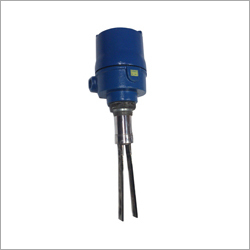
Vibrating Fork type Level Switches
Vibrating Fork type Level Switches are single point level switches. The electronics control unit is integral with the sensing probe. Fail safe logic is field selectable.
Note :To receive quick response, please provide your basic requirement details and max.Application information.
| There ate two type of Vibraing Fork Level Switches | Vibraing Fork for Solids |
| Vibrating Fork for Low Density material & Liquids |
| Housing | Cast Aluminium Weatherproof |
| Mains | 230 V AC, 110 V AC or, 24 V DC |
| Output | 2 set of C/O contacts rated at 5 amps, 230 V AC for resistive loads. |
| or. PNP NO |
| Switching Delay | 2 sec to 20 Sec ( adj.) for probe covered and uncovered (OPTIONAL) |
Versatile Level DetectionThis vibrating fork level switch is ideal for monitoring a variety of substances, including liquids, wet solids, and powders. With its robust construction and ability to detect materials with densities as low as 0.6 g/cm, it provides dependable level control across numerous industries, ensuring process reliability and efficient automation.
Built for Challenging EnvironmentsHoused in die-cast aluminum or stainless steel and boasting IP67/IP68 protection, the switch resists dust and water ingress. Rated for -40C to +150C and pressures up to 10 bar, it ensures consistent performance even in extreme processing conditions. This makes it suitable for use in chemical, food, and material handling plants.
Efficient and Reliable OperationWith a low power consumption (<2W on DC models), a fast response time of under half a second, and a mechanical life exceeding one million operations, this level switch combines efficiency with longevity. Factory-set sensitivity minimizes user error and requires little maintenance, while SPDT output and varied mounting options simplify integration into existing systems.
FAQs of Vibrating Fork type Level Switches:
Q: How does the vibrating fork level switch detect different materials?
A: The switch uses a vibrating fork that changes its resonance when immersed in a liquid, wet solid, or powder. This change is detected electronically, providing a reliable signal for level detection, independent of electrical properties and most material characteristics.
Q: What are the main benefits of choosing this vibrating fork level switch?
A: Key advantages include suitability for a wide density range (0.6 g/cm), robust die-cast aluminum or stainless steel construction, factory-set sensitivity for easy setup, low power consumption, and excellent resistance to harsh environments with IP67/IP68 rating.
Q: Where should I install this level switch for optimal performance?
A: Install the switch in tanks, silos, or pipelines where continuous or point-level detection of liquids, wet solids, or powders is required. Threaded or flanged mounting options are available to ensure secure installation in various industrial settings.
Q: What is the process for connecting the switch to my control system?
A: The switch offers SPDT relay or solid-state outputs and supports a rated voltage of 230 VAC or 24 VDC, with maximum currents up to 5A. Wiring is done through PG9 or PG13.5 cable entries for safe and secure electrical connections to your automation system.
Q: When is maintenance required for this vibrating fork level switch?
A: Routine visual inspections are recommended, but due to its factory-set sensitivity and rugged design, the switch requires minimal maintenance. Its high mechanical life (>1 million operations) ensures longevity and reliability in continuous operation scenarios.
Q: What applications are best suited for this level switch?
A: This switch is ideal for chemical processing, food and beverage, bulk material handling, and pharmaceutical industries. Its wide operating temperature range and resistance to dust and water ingress make it versatile for many industrial liquid and powder level detection tasks.











 Send Inquiry
 Send Inquiry
 Send SMS


